We Danced Her Home: Why We Must Celebrate Our Leaders
Oct 26, 2026 by Laurel Sabur
How the Caribbean community welcomed Dr. Rhonda McEwen, UVic’s new president, in soca, colour and joy, and why moments like this matter.
The moment the music dropped
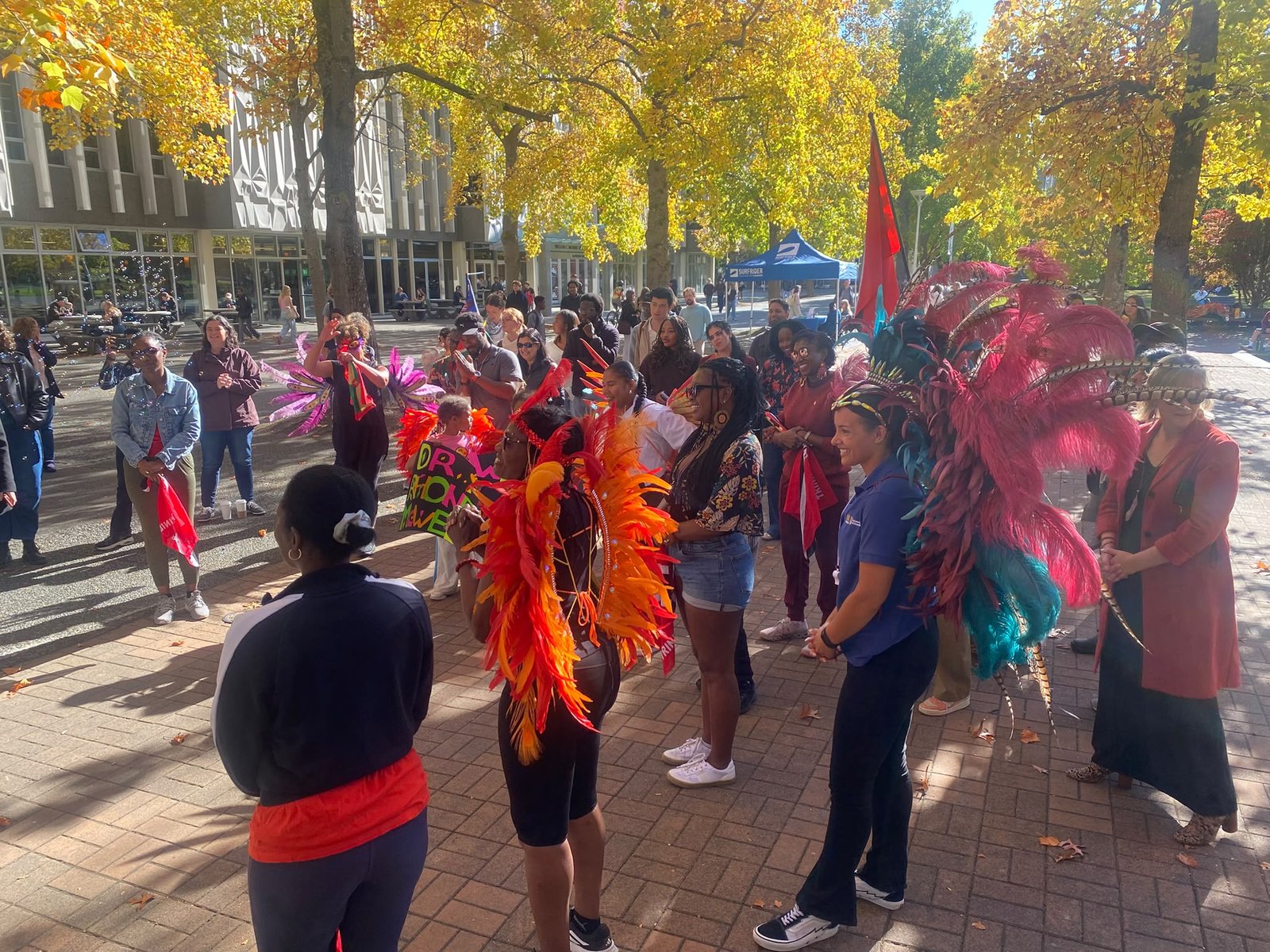
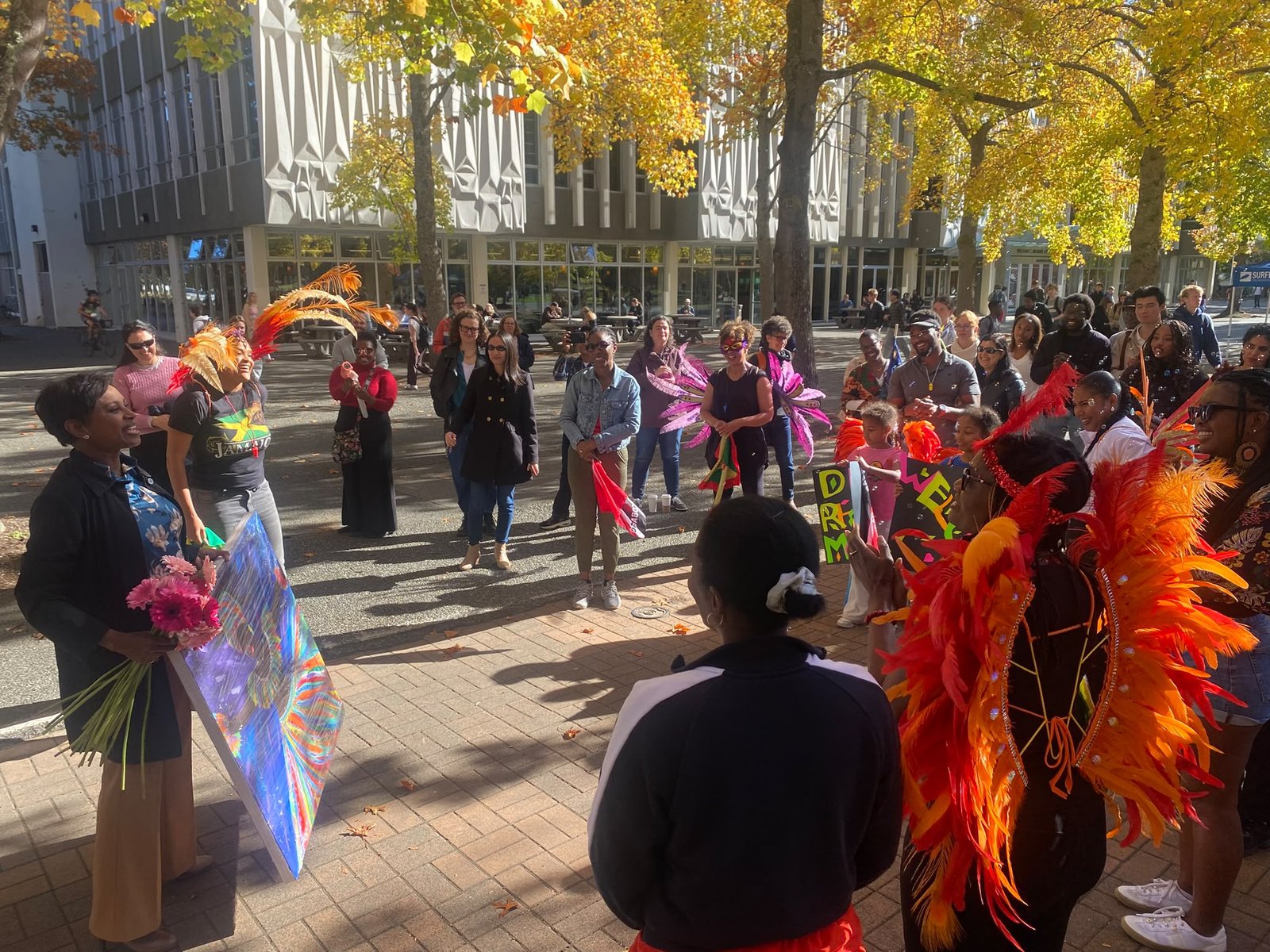
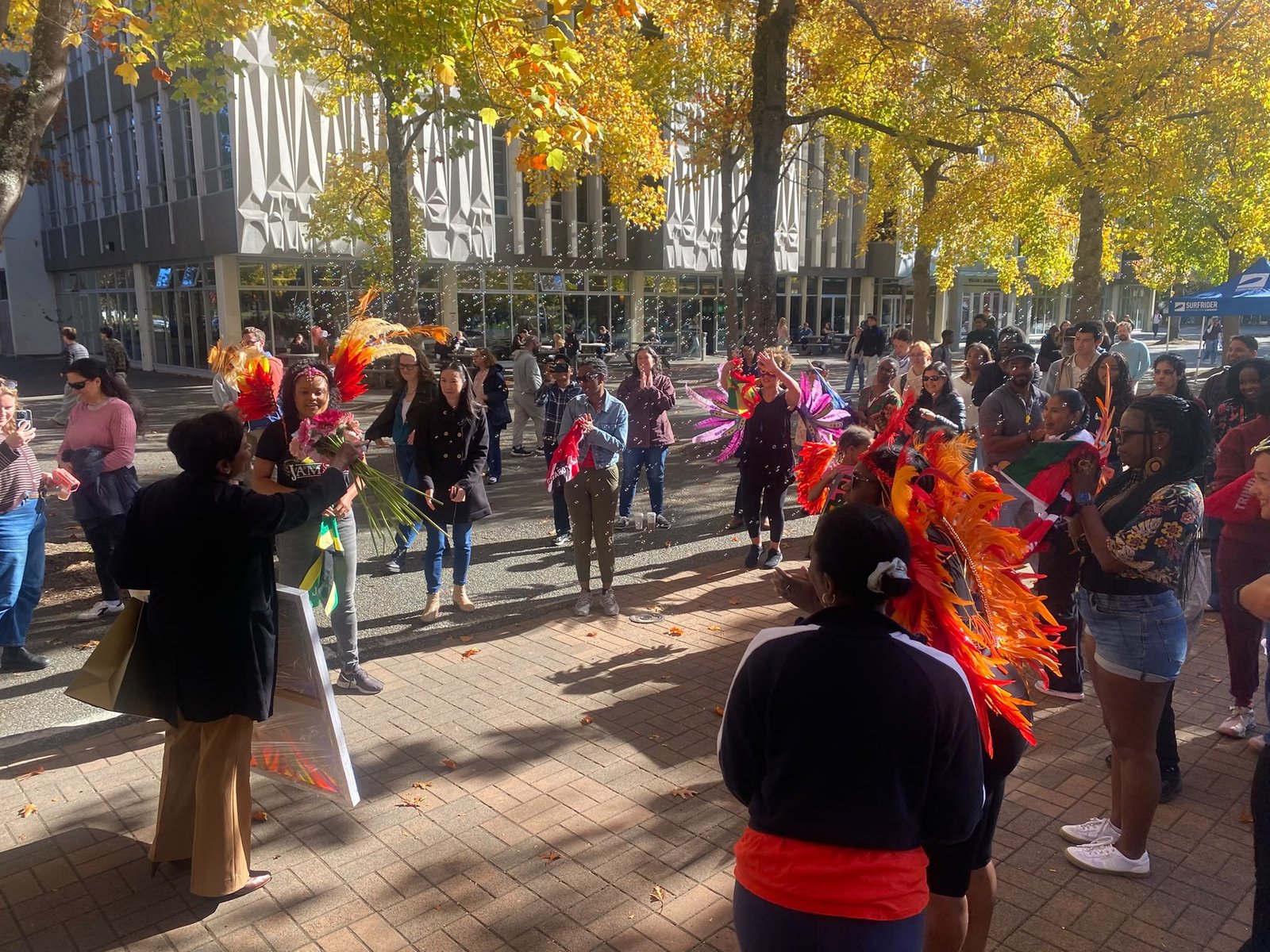
It started the way a flash mob should: quietly. A few of us standing around like we had somewhere else to be. Then the soca came on, and suddenly we were everywhere.
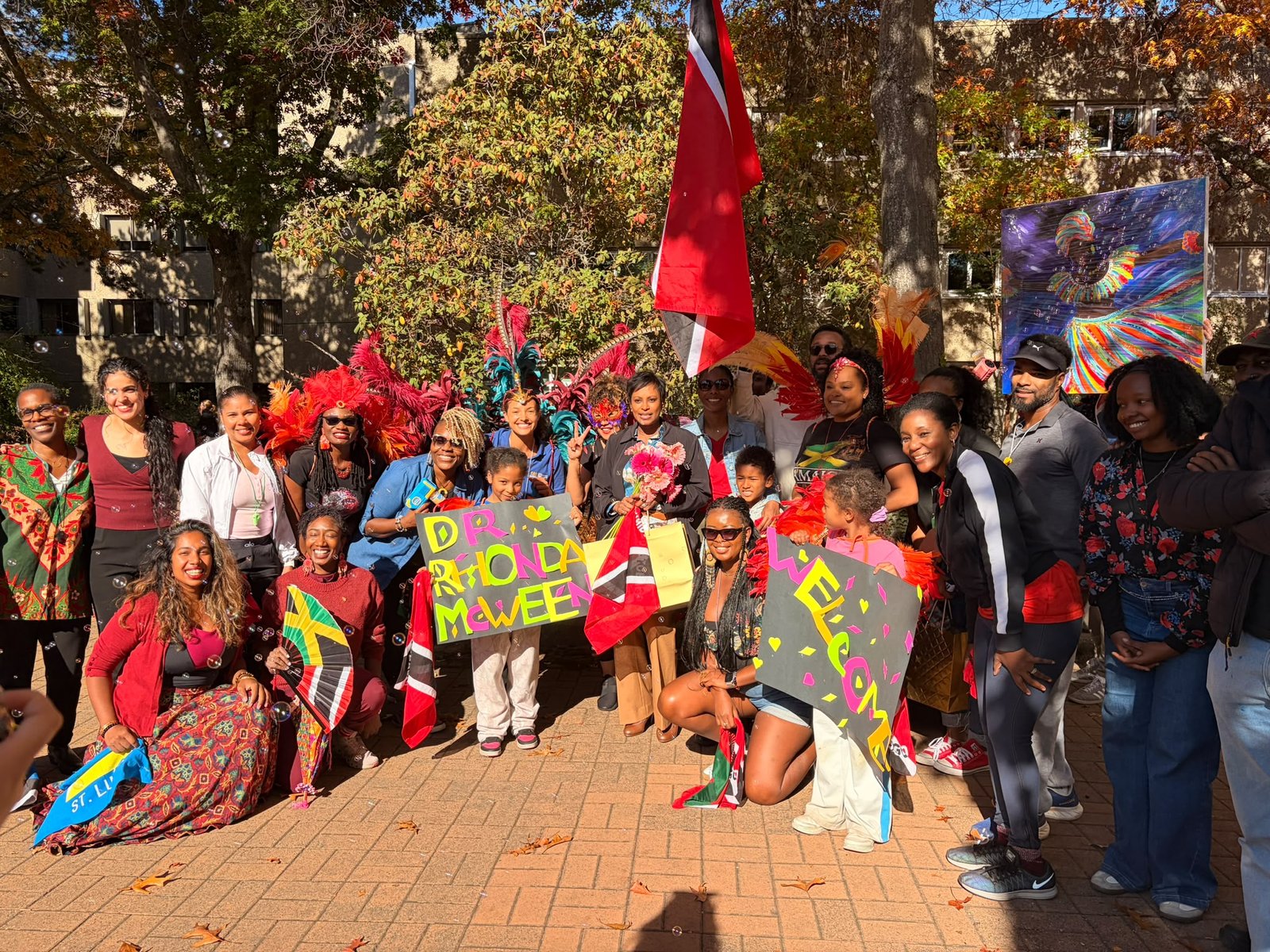
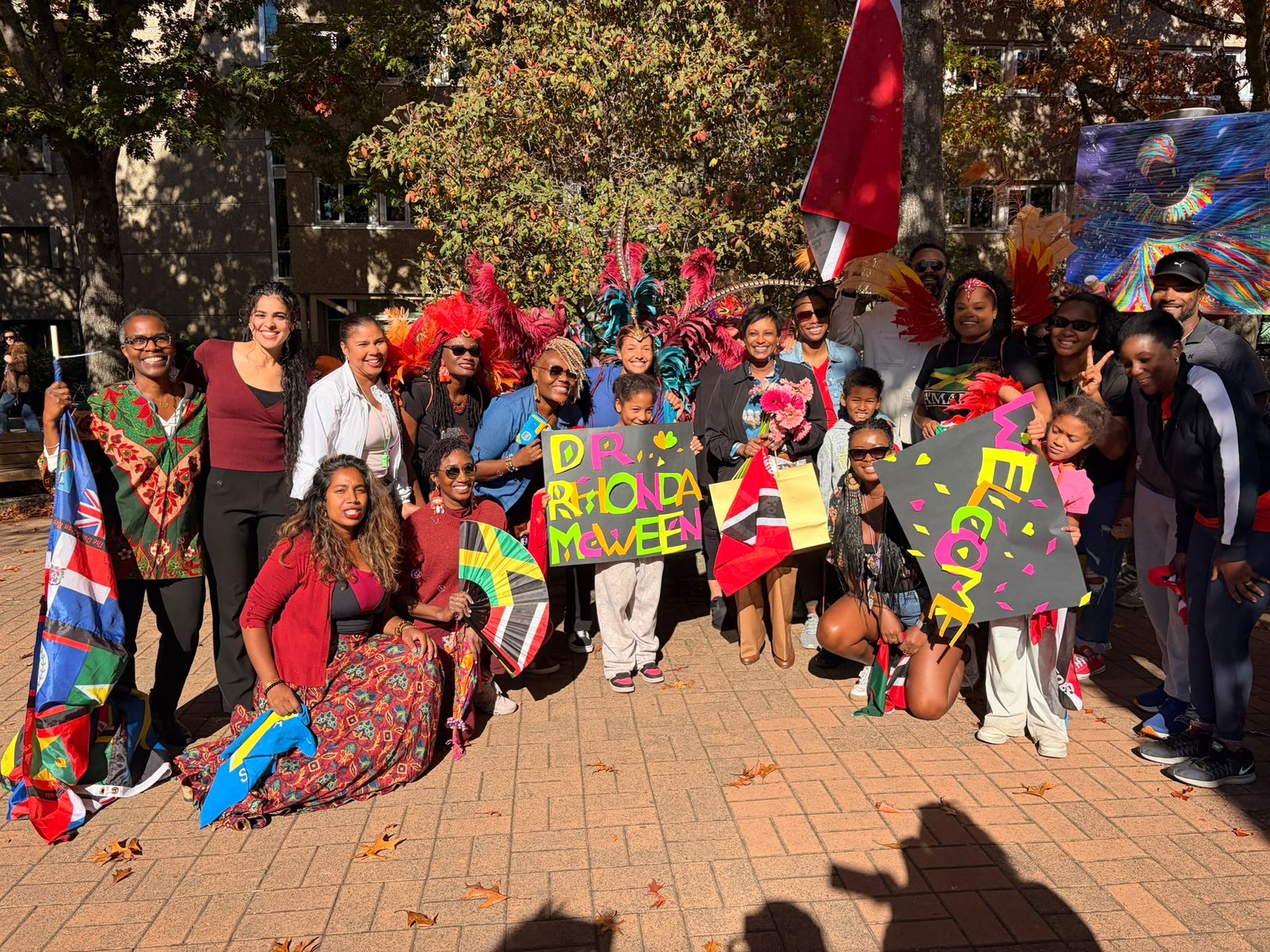
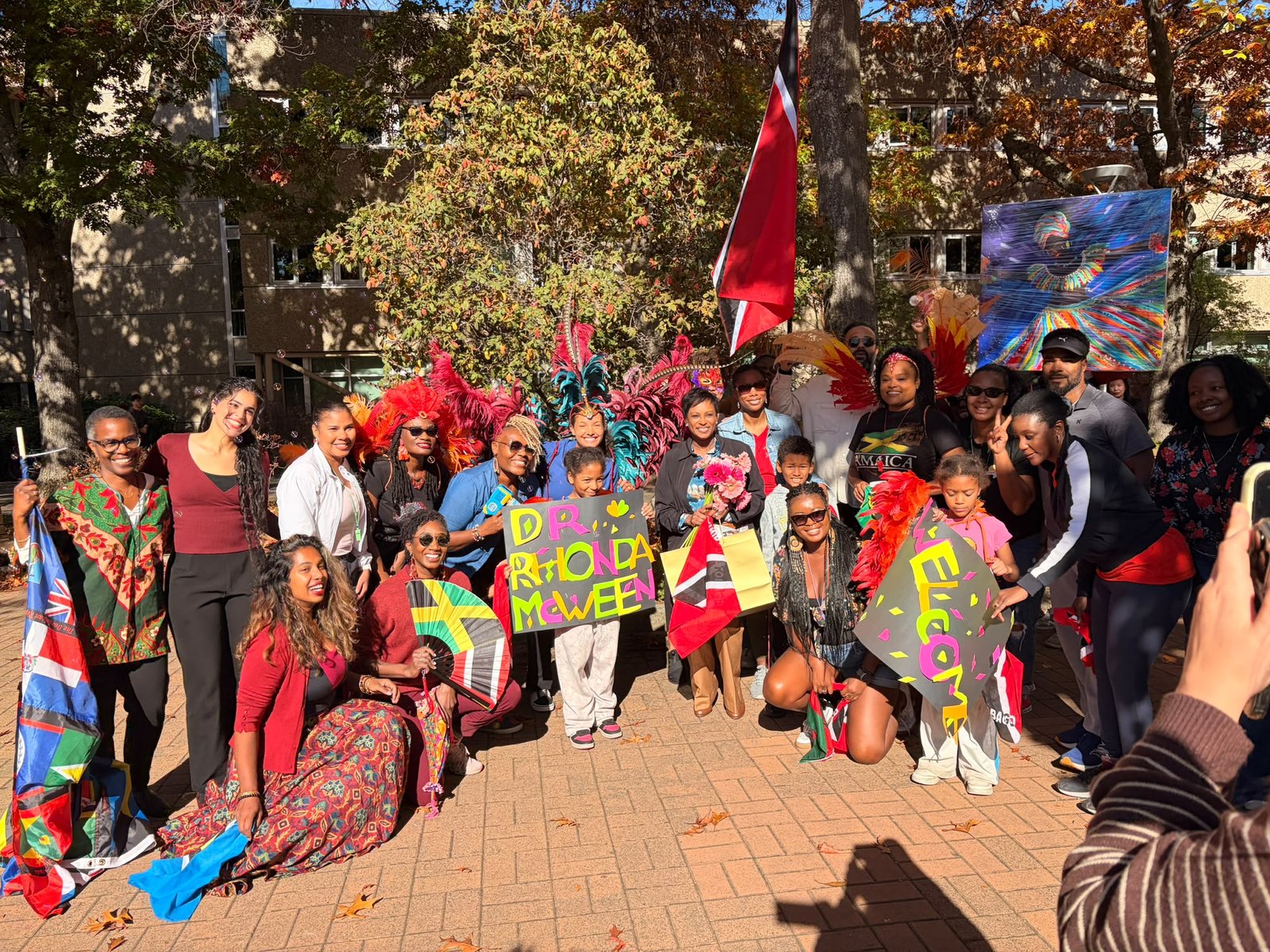
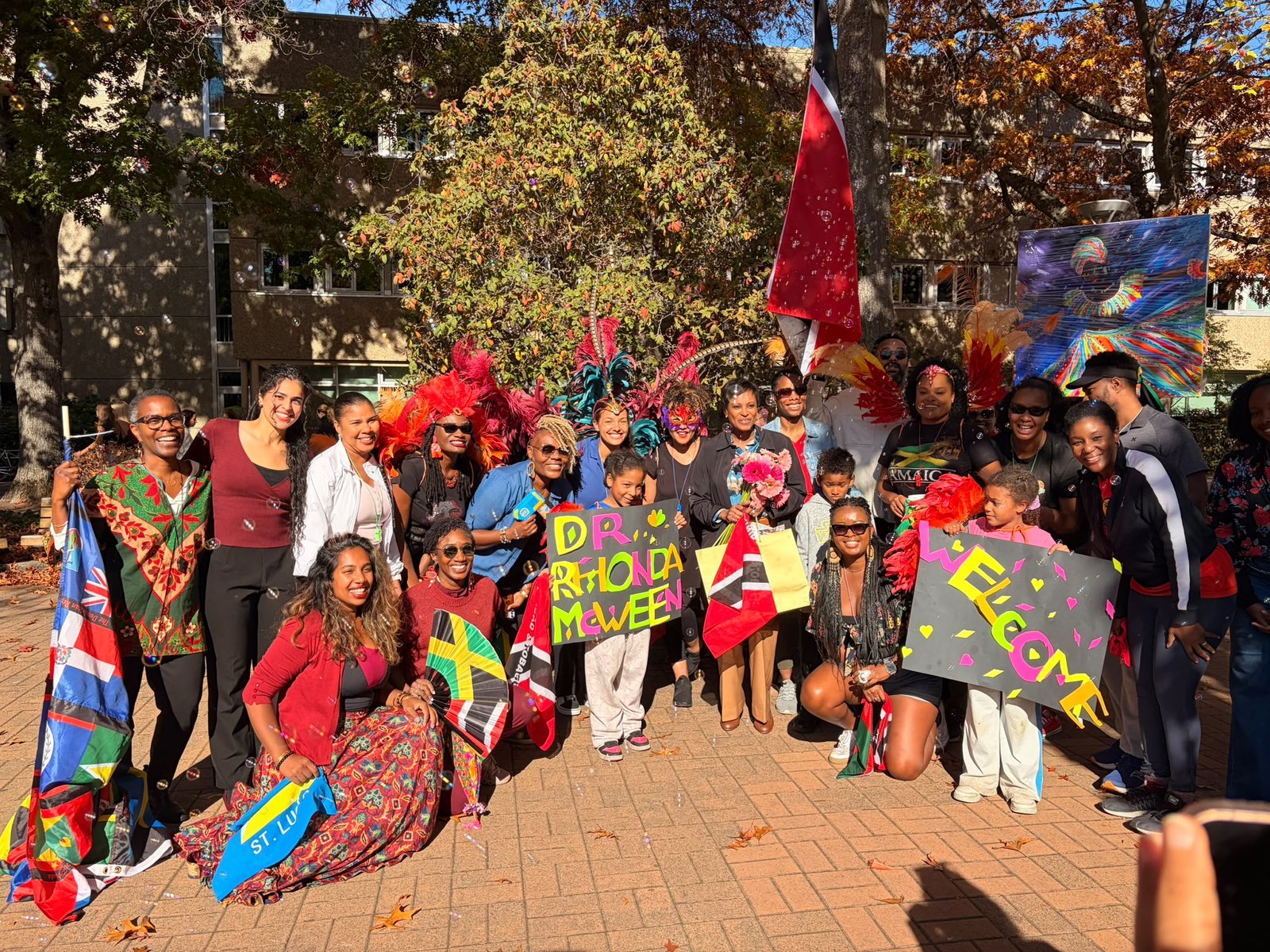
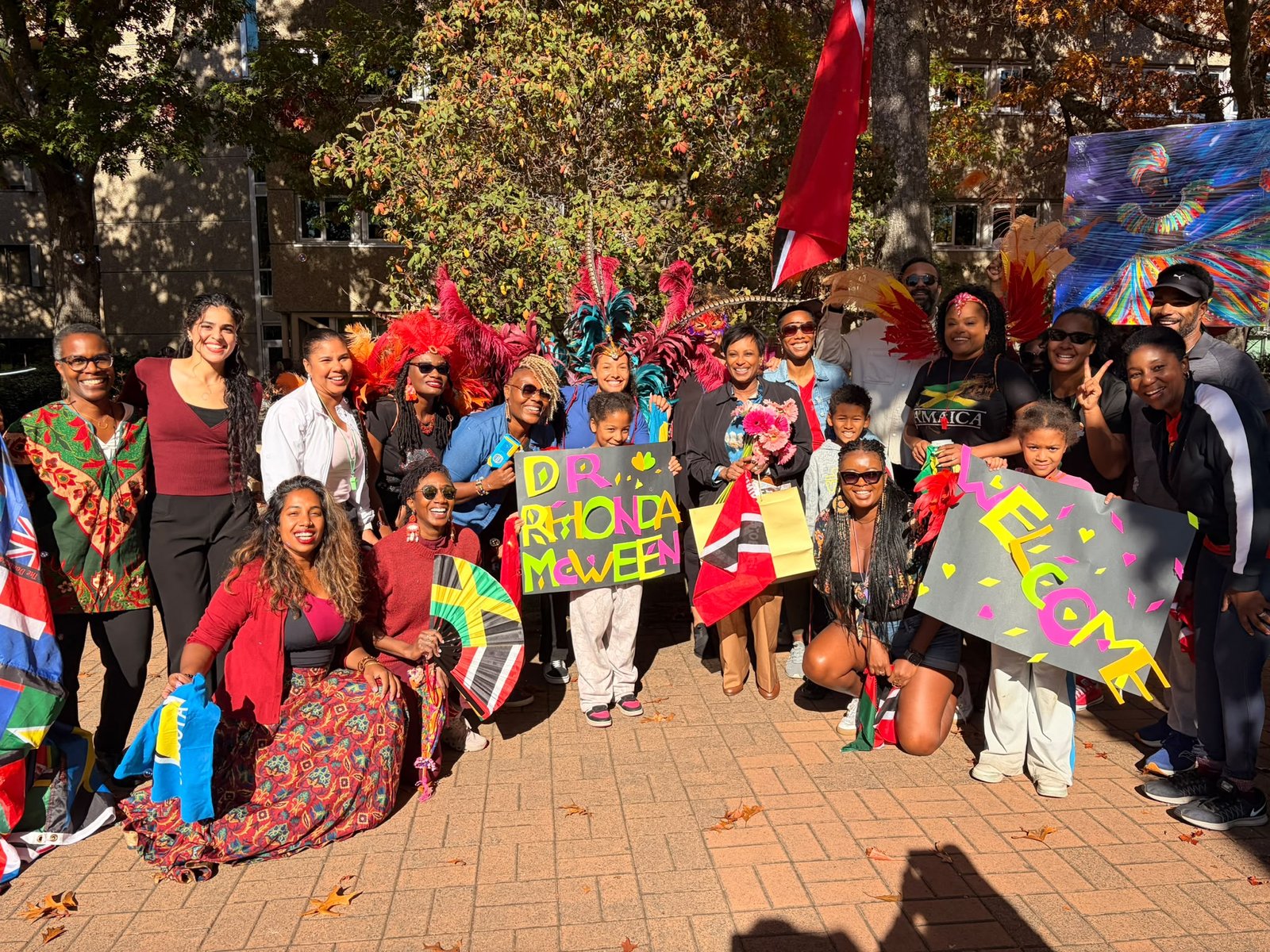
Students, staff, parents, children and friends from across the Uvic and Victoria Caribbean community came together on October 16, 2026 to welcome Dr. Rhonda McEwen, the new president and vice-chancellor of the University of Victoria. We came in costume, with feathers and flags and colour. We came with a gift. Most of all, we came to dance.
For a few minutes, a corner of the campus became alive. People jumping, whistles blowing, waists moving, flags were waving, and our new president was smiling right in the middle of it. It was a celebration. And for many åf us, it was something deeper: a homecoming we didn’t know we needed.
A daughter of Trinidad and Tobago
Dr. Rhonda McEwen began her term as UVic’s ninth president on October 14, 2026. She is the first Black woman to lead the university in its 63-year history. Before coming west, she made history in Toronto too: in 2022 she became president of Victoria University at the University of Toronto, the first Black woman to lead a university in Canada.
She was born in Trinidad and Tobago, the child of teachers. She earned her first degree, with first class honours, at the University of the West Indies, St. Augustine. She went on to become a Canada Research Chair and a scholar of emerging media. Her research has even explored how AI understands Trinidad English Creole. She carries home with her into everything she does.
Her roots also run through this country’s own history. As she told CBC, she descends from Black Refugees of the War of 1812 who settled in Nova Scotia and served in an all-Black colonial unit. In 1820 they sailed from Halifax to Trinidad, where they joined the Merikins, formerly enslaved African Americans who had won their freedom fighting alongside the British. Two centuries later, their descendant has come back to Canada to lead one of its universities. There is a poetry in that we could not ignore.
Who we are: a people of rhythm, colour and freedom
To understand why we danced, you have to understand who we are.
Caribbean people are a beautiful blend. Africa, India, Europe, China, the Middle East and the first peoples of the islands all meet in us. You can taste it in our foods. You can hear it in our voices and see it in our faces. We are many stories that became one family.
Most of us are of African descent, the children of people who were enslaved and brought across the ocean to work on sugar plantations. But every island tells its own story. In Trinidad and Tobago and in Guyana, the descendants of Africa live side by side with the descendants of India, whose ancestors came as indentured workers after emancipation. So many of us carry more than one heritage that the old lines blur. The blend is who we are.
And you can hear it, most of all, in our music. Calypso, soca, steelpan, reggae, chutney, dancehall: our music was born from struggle and turned into joy. Carnival itself grew out of emancipation. When our ancestors were freed, they took to the streets in costume and rhythm to declare that they belonged to themselves. Today it remains a joyful expression of freedom across the many islands, and we bring that spirit of joy to everything worth celebrating.
When we put on our costumes, we are not dressing up. We are showing up as our full, colourful, unapologetic selves.
Why we must celebrate our leaders
Here is the part that is hard to say out loud. Living as Caribbean and Black people in Canada, and especially here on the West Coast, can be lonely. Many of us are the only one in our office, our classroom or our department. We are often misunderstood. We are too often underestimated. We learn to make ourselves smaller and quieter to fit into spaces that were not built with us in mind.
So when one of us rises to lead, it matters. It matters more than a headline can hold.
It matters for her. Leadership at the top can be its own kind of lonely. We wanted Dr. McEwen to know, from her very first days, that she has a community here. That she is seen. That she is welcome. That on this island, there are people who know the sound of home.
It matters for us. That flash mob was a release. For a few minutes, we did not have to translate ourselves. We did not have to tone anything down. We got to be fully Caribbean, out loud, on a university campus, in front of everyone. Celebrating her gave us permission to celebrate ourselves.
It matters for our children. Our kids were there, dancing beside us. They saw a Black woman, a Trinidadian woman, a woman who sounds like their mothers, leading a major Canadian university. You cannot become what you cannot see. Now they have seen it. That picture will stay with them long after the music stops.
It matters for everyone. Celebrating Black leaders is not about separating ourselves. It is about expanding what leadership looks like for all Canadians. When we honour our leaders in our own way, with our own music and our own joy, we invite the whole community into a richer picture of who belongs here.
Welcome home, Dr. McEwen
We gave Dr. McEwen a gift that day: a warm welcome . But the real gift went both ways. She gave us a reason to gather, to dress up, to dance and to feel proud. We gave her a piece of home on the edge of the Pacific.
Our ancestors danced in the streets to celebrate their freedom. We danced on campus to celebrate one of our own. The rhythm is the same. The message is the same: we are here, we are whole, and we are worth celebrating.
To Dr. McEwen: welcome to Victoria. We see you. We are proud of you. And whenever you need to hear a little soca, you know where to find us.
To everyone who danced, brought a child, or simply showed up: thank you. Let’s keep making these spaces. Our leaders deserve them, and so do we.